
Purposeful business leadership begins with a question I keep returning to: what do we have, and who else could it serve? At Arimah Travel and Tours, this question shapes how we think about corporate social responsibility. CSR for us is not a separate initiative. It is part of how we understand our role in society, and it starts with a simple principle. Use what we have to create access for others.
This post is a reflection on what that looks like in practice, and why I believe access is the quietest and most defining lever of impact.
Why purposeful business leadership starts with access
I grew up watching planes cross the sky, curious about what life looked like beyond them. For a long time, I thought they were roads in the sky. I only travelled much later, once I started working. As a child I had to build my own picture of that world, because I had no direct route into it.
That experience still shapes how I see responsibility today. Access plays a defining role in shaping possibility, particularly for young people still forming their sense of direction. When a child cannot see a world, they cannot imagine themselves inside it. And what we cannot imagine, we rarely pursue.
Purposeful business leadership begins where this gap is recognised. Every organisation operates inside environments, systems, and conversations that hold real value to someone outside. The question is whether we are willing to share them.
What this looks like at Arimah
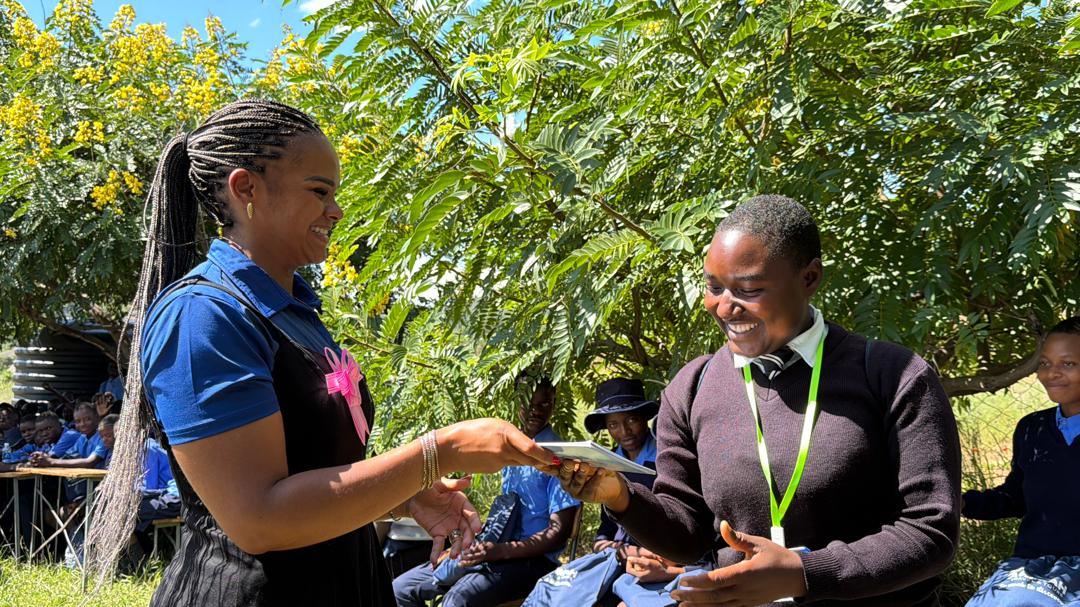
At Arimah, we work with children from underprivileged backgrounds by introducing them to the world of travel and tourism. This means exposure to airports, aviation environments, hospitality spaces, and the wider industry we operate in. We are making visible a world they might otherwise never encounter.
Alongside this, we offer support within our capacity. We share knowledge, give guidance, and create early career awareness. These are small interventions. Even so, they can shape how a young person begins to understand possibility.
We also recognise that not every child can be brought into our environments. Some communities are hard to reach, and the children there are often the ones who most need a window into a wider world. So we take that window to them.
How does access travel work where children cannot?
In partnership with Pumulani and Books for Africa, we create small libraries in the communities we visit. The intent is straightforward. If a child cannot board a plane, they can still travel. Books let them go on excursions in their mind, because reading is its own form of access. A library in a rural school is a passport in a different shape.
This is where I have come to understand purposeful business leadership most clearly. The question is not always about scale. It is about whether the resource you hold reaches someone who needs it. A flight, a tour, a guided visit, a stack of books in a quiet classroom. Each of these is access made physical.
Leadership lessons in shared resources
I am learning as I go, both in leadership and in life. One of the clearest lessons so far is that every organisation holds something of value. Knowledge. Environment. Systems. Experience. When these are shared responsibly, they extend beyond business outcomes. They contribute to broader social impact.
As businesses grow, so does their capacity to contribute beyond their core purpose. CSR is where that capacity becomes practice. It is not the showpiece on the side of the strategy. It is the quieter expression of why the business exists in the first place.
There is a verse I sit with often, from Luke 12:48 in the New International Version: “From everyone who has been given much, much will be demanded.” I do not read this as a heavy obligation. I read it as an invitation. What we hold is rarely only for us. Purposeful business leadership treats this as a working principle, not a sentimental idea.
What CSR is really measuring
CSR is sometimes framed as proof of corporate goodwill. I have come to see it differently. It is a measure of how an organisation answers the question of stewardship. Do we hold our resources tightly, or do we let them open something for someone else?
Purposeful business leadership is defined not by scale or complexity, but by intention, consistency, and contribution beyond oneself. A small library that is replenished is more powerful than a large donation that is announced once. A single airport visit that introduces a child to ten possible careers is more shaping than a campaign with a hashtag. The work has to be continuous to count.
This is also why we keep the work close to our environment. We are not trying to solve every gap. We are trying to be useful inside the one we operate in. That is a more honest and more sustainable way to contribute.
A reflection for other leaders
If you lead a business, however small, you already hold something that could create access for someone else. It might be a tour of your office. A conversation with a young person. A skill you take for granted. A space you can lend for an afternoon. Purposeful business leadership starts with noticing what you have, and asking who is on the other side of the door.
The child watching the plane will become someone. What they imagine themselves capable of often depends on what they have been allowed to see. We cannot reach every child. But we can reach the ones nearest to us, and that is enough to begin.
That is where access becomes impact.
I would love to hear how your own organisation thinks about this. What is the resource you hold that could open a door for someone else? Share your reflection in the comments, or read on with my thoughts on women leading with intention in Africa and why purpose is the truest measure of growth.